
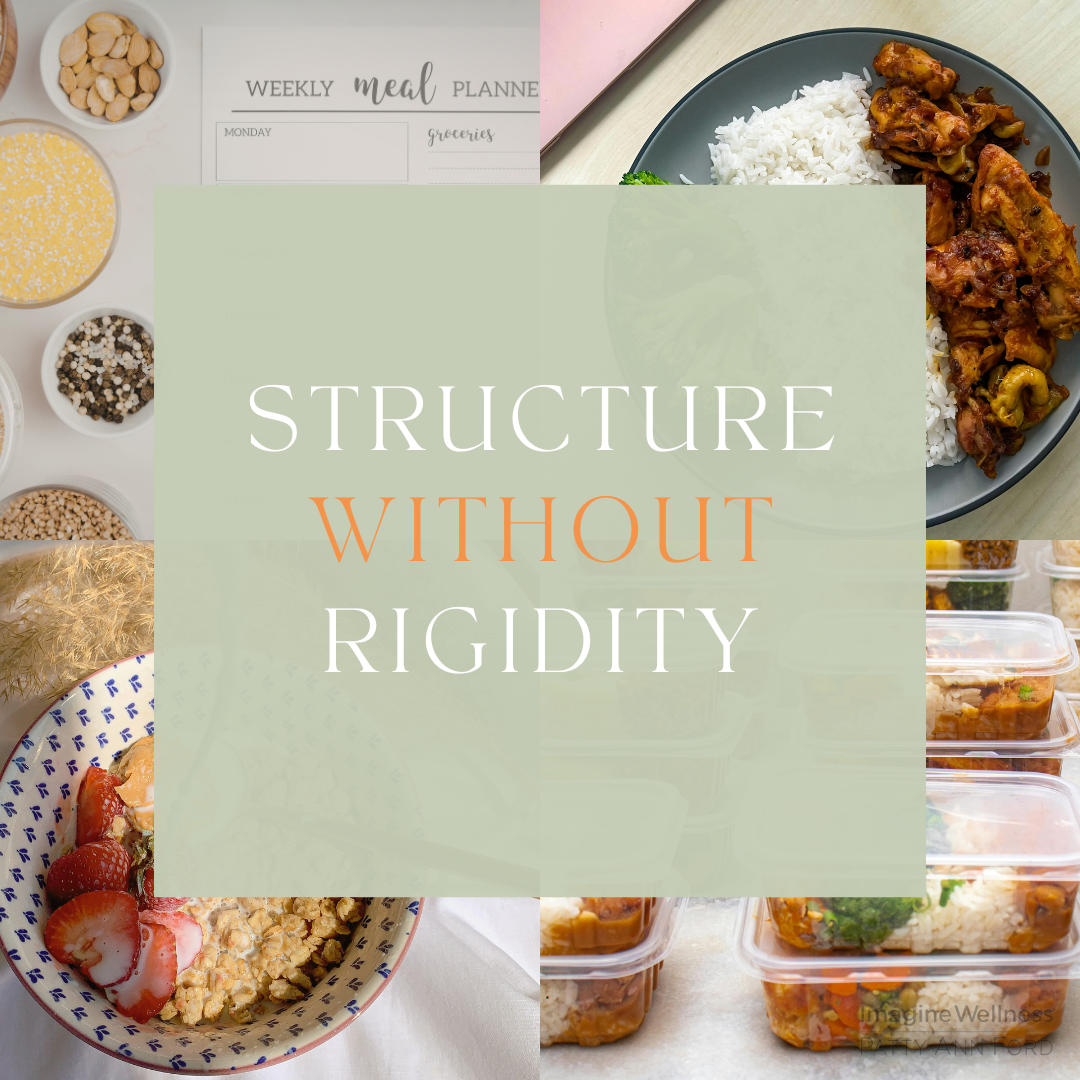
How to create a rhythm with food that actually works for your life
Meal planning has a reputation.
For some, it looks like perfectly portioned containers lined up in the fridge, every meal mapped out days in advance. For others, it feels like something they should be doing but avoid because it feels overwhelming, restrictive, or unrealistic for a busy life.
But here’s the truth:
Meal planning isn’t one specific method.
It’s a spectrum and more importantly, it’s a form of support.
When there’s no plan, food feels harder…
Most people don’t struggle with food because they lack knowledge.
They struggle because decisions are happening in moments of:
* stress
* exhaustion
* time pressure
* emotional overwhelm
And in those moments, even simple choices can feel heavy.
Without some level of planning, food becomes reactive instead of intentional.
Meals feel chaotic. Hunger cues get confusing. And often, there’s a quiet sense of being “off track” even when nothing is actually wrong.
A plan doesn’t create restriction. It creates relief.
Meal Planning Isn’t All or Nothing
One of the biggest misconceptions is that meal planning has to be rigid to be effective.
In reality, it can look very different depending on your needs, your personality, and your season of life.
1. High Structure: Detailed Planning
This might include:
* planning meals for the entire week
* tracking portions or macronutrients
* repeating structured meals
This level of planning can be helpful for:
* medical nutrition therapy
* specific health goals (like blood sugar management)
* athletes or performance-focused individuals
It offers clarity and precision but it’s not required for everyone.
2. Balanced Structure: Flexible Planning
This approach might include:
* planning a few meals, leaving others open
* prepping ingredients instead of full meals
* having a loose outline for the week
This is often where many people thrive.
It provides enough structure to reduce stress, while still allowing room for real life.
3. Low Structure: Supportive Planning
This can look like:
* keeping staple foods stocked
* having a few go-to meals always available
* choosing meals in the moment based on hunger, time, and energy
This is still planning just in a quieter, more intuitive way.
And for busy families or full schedules, this approach can feel the most sustainable.
The Real Goal: Predictability Without Pressure
The goal of meal planning isn’t perfection.
It’s creating a rhythm where food feels:
* more predictable
* less stressful
* easier to respond to
When there’s some level of consistency:
* your body starts to trust when food is coming
* hunger and fullness cues feel clearer
* decision fatigue decreases
* meals feel less emotionally loaded
This isn’t about control.
It’s about creating a sense of safety around food.
5 Gentle Meal Planning Habits to Start With
If meal planning has felt overwhelming in the past, start small. Think of these as anchors not rules.
1. Repeat a Few Meals
Choose 2–3 meals you’re okay eating more than once this week.
Consistency reduces the mental load.
2. Build in Backup Options
Keep a few easy meals on hand for busy days:
* eggs
* wraps
* frozen meals
* simple grain + protein combinations
This prevents the “there’s nothing to eat” spiral.
3. Prep Ingredients, Not Perfection
Instead of full meal prep, try:
* washing and chopping produce
* cooking a protein
* prepping grains
This gives you flexibility while still saving time.
4. Create Simple Snack Structure
Pairing nutrients can make a big difference:
* protein + fiber
* fat + carbohydrate
Examples:
* apple + peanut butter
* yogurt + berries
* crackers + cheese
5. Pause Before You Eat
Before a meal, take a moment to ask:
“What would feel good right now?”
This builds awareness and reconnects you to your body even within structure.
A Different Way to Think About Planning
Meal planning isn’t about doing more.
It’s about making things easier later.
It’s a way of supporting your future self, especially on the days when energy is low, time is limited, or life feels full.
And it doesn’t have to be perfect to be effective.
Final Thoughts
You don’t need a rigid system to feel more in control around food.
You just need a little more intention than yesterday.
At Imagine Wellness Medical Group, we help you find your version of structure,
one that works with your body, your lifestyle, and your story.
Because sustainable health isn’t built on extremes.
It’s built on small, consistent, supportive choices over time.
Recent Comments